Elevate Your Billiard Game with
Customizable Cuetip
The mainstream leather head sizes (such as 9mm, 10mm, 11mm)
can match the vast majority of snooker and American clubs.
Our Featured Products
-
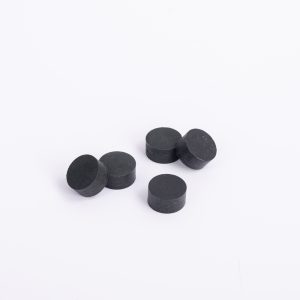 Cue Tips
Pool Cue Tips 11MM, 12MM, 14MM Multi-layer Cue Tip
$1.50 – $2.80价格范围:$1.50 至 $2.80评分 0 / 5 -
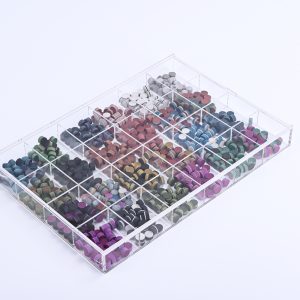 Cue Tips
Pool Cue Tips 11MM, 12MM, 14MM Multi-layer Cue Tip
$1.50 – $2.80价格范围:$1.50 至 $2.80评分 0 / 5 -
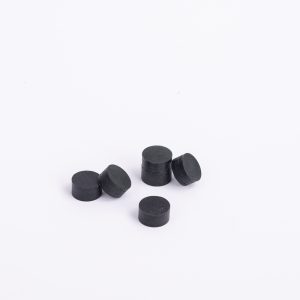 Cue Tips
Pool Cue Tips 11MM, 12MM, 14MM Multi-layer Cue Tip
$1.50 – $2.80价格范围:$1.50 至 $2.80评分 0 / 5 -
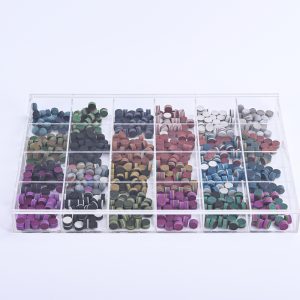 Cue Tips
Pool Cue Tips 11MM, 12MM, 14MM Multi-layer Cue Tip
$1.50 – $2.80价格范围:$1.50 至 $2.80评分 0 / 5 -
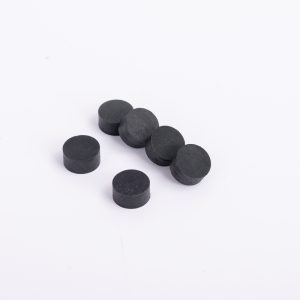 Cue Tips
Pool Cue Tips 11MM, 12MM, 14MM Multi-layer Cue Tip
$1.50 – $2.80价格范围:$1.50 至 $2.80评分 0 / 5 -
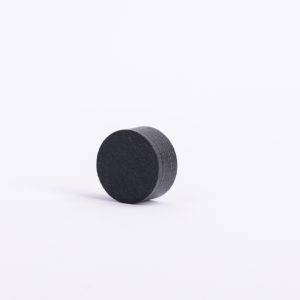 Cue Tips
Pool Cue Tips 11MM, 12MM, 14MM Multi-layer Cue Tip
$1.50 – $2.80价格范围:$1.50 至 $2.80评分 0 / 5 -
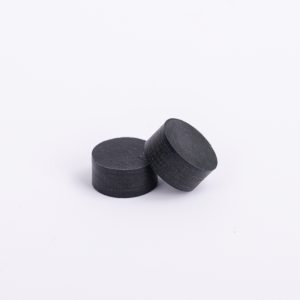 Cue Tips
Pool Cue Tips 11MM, 12MM, 14MM Multi-layer Cue Tip
$1.50 – $2.80价格范围:$1.50 至 $2.80评分 0 / 5 -
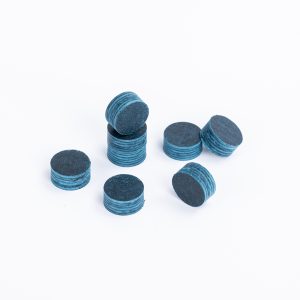 Cue Tips
Pool Cue Tips 11MM, 12MM, 14MM Multi-layer Cue Tip
$1.50 – $2.80价格范围:$1.50 至 $2.80评分 0 / 5
Entering Ruike Sports
Equipment
Dongguan Ruike Sports Goods Co., Ltd. is a professional manufacturer of billiard cue tips, chalk powder, cue tip repair tools, chalk clips, billiard cue extension handles, and cue release practice devices. Each product is meticulously crafted, with a focus on precision and detail to ensure outstanding performance and durability. We use the highest quality materials and advanced manufacturing techniques to create products that meet the highest standards. Our company’s integrity, strength and product quality have been recognized in the industry. We are committed to providing high-quality billiards equipment to meet the diverse needs of our customers. Our extensive product range ensures that billiards players of all levels can find the perfect equipment to enhance their competition skills.

OUR ADVANTAGES
Imported Raw Materials
Imported raw materials are used, and 32 material testing standards are passed to ensure that the hardness deviation of each batch of products is ≤ 0.5 Shore hardness
Refined Production System
Realize high-precision standards of scalp thickness tolerance ± 0.02mm and edge smoothness Ra ≤ 0.8 μ m; Seven manual re inspections were conducted, and the defect rate was controlled below 0.3%.
Authoritative Certification
Through ISO 9001 quality system certification and WPBSA compliance testing, the product can directly adapt to professional sports club brands.
Our Products Are
Sold Worldwide
Ruike will further improve its international business strategy
layout for billiards accessories. The international development
strategy of “based on technological innovation, design
innovation, domestic circulation as the main body, and domestic
and international dual circulation” is steadily advancing.
Customized Service
Meet Personalized
We are not only a factory, but also a powerful supplier behind you.
We follow up on the entire process and provide full cycle services such as
technical consultation, sample adjustment, and after-sales feedback.
Full Dimensional
Customization Options
24-hour Response
Process
Exclusive Service
Docking
Multi Channel Logistics
Support
Segmented Scenario Solutions
RuiKe is willing to be your sincere and trustworthy partrer!
Have A Query?
What is the reason why the leather head fell off shortly after installation? How to solve it?
Common reasons: ① Incorrect selection of glue (using ordinary 502, AB glue, etc., with insufficient bonding strength and easy hardening and brittle cracking, unable to adapt to the slight deformation of the leather head and club); ② Untreated contact surface before installation (residual old glue and dust on the copper nozzle of the golf club, or uneven bottom of the leather head, resulting in a smaller bonding area); ③ Insufficient curing (short pressing time, glue used before fully drying).
Solution: ① Replace with slow drying glue specifically designed for billiard leather heads (curing time 8-12 hours, strong flexibility, able to cope with the impact force of hitting the ball); ② Before installation, lightly grind the surface of the copper nozzle and the bottom of the leather head with 120 grit sandpaper, and then wipe clean with alcohol to ensure that there are no impurities; ③ After sticking, use a leather clip or a weight of about 500g to press it together, let it stand for more than 12 hours, confirm that the glue is completely cured, and then hit the ball.
How to adjust the eccentricity of the leather head and the overall deviation of the ball after installation?
Common reasons: ① Failure to align the central axis of the ball rod during installation (which is prone to deviation based on visual inspection); ② The size of the leather head does not match the copper nozzle (for example, if the diameter of the copper nozzle is 10mm and a 9.5mm leather head is used, it is prone to deviation); ③ Uneven force during compression (due to tilting of heavy objects causing displacement of the skin head).
Solution: ① Use a leather head locator (or draw a cross line at the center of the copper nozzle) to align with the center of the leather head, ensuring that the two axis lines coincide; ② Choose a leather head with the same diameter as the copper nozzle (with an error not exceeding 0.2mm, for example, if the copper nozzle is 10mm, choose a leather head with a diameter of 10 ± 0.1mm); ③ When pressing, use a level to confirm that the heavy object is vertical, or use a leather clip with positioning function to fix it and avoid displacement.
The leather head wears out very quickly, and it becomes thin shortly after replacement. How can we extend its lifespan?
Common reasons: ① Frequent use of “violent dribbling” (when spinning the ball sideways, the friction between the edge of the ball and the cue ball intensifies); ② Improper maintenance (long-term exposure to humid environments, softening and easy wear of the leather head; or accumulation of chocolate powder on the surface that is not cleaned, forming a hard shell that is prone to cracking); ③ The hardness of the leather head is chosen too soft (such as beginners using 50-60 Shore soft leather heads, which are prone to deformation due to frequent hitting).
Solution: ① Reduce unnecessary violent plugging, try to keep the club head vertical when hitting the ball, and use “small force precise plugging” instead of “strong force side spin”; ② When not in use, place the cue stick in a dry cue stick box and wipe off the surface of the skin with a dry cloth after each use; ③ Select hardness according to the scenario (beginner 60-70 Shore, club commercial 70-80 Shore, professional 80-90 Shore), avoiding the combination of “soft leather head with high-frequency use”.
Is the feeling of "stuffiness" and "poor power" when hitting the ball related to the skin?
Possible reasons: ① The surface of the leather head is too smooth (due to insufficient grip force, the cue ball is prone to slipping, resulting in poor transmission of force); ② The leather head is either too hard or too soft (too hard can cause “pushing hands”, too soft can cause “suction”, both of which affect the force feedback); ③ There is a depression in the middle of the leather head (when hitting the same landing point for a long time, the deformation of the leather head forms a “groove”, and the hitting point is unstable).
Solution: ① Use 120 grit sandpaper to lightly grind the surface of the leather head and create a uniform rough texture (do not grind to the edges to avoid uneven thickness); ② Adjust the hardness according to the habit of applying force (choose the harder version with a force of 75-85 Shore, and the softer version with a force of 65-75 Shore); ③ If the leather head is dented, use a leather head file to trim the surface and restore flatness (it is recommended to replace it directly if the indentation is too deep to avoid affecting the accuracy of hitting the ball).
Should beginners choose a soft or hard leather head? What size is suitable for selection?
Hardness recommendation: Novice players should first choose a medium soft leather head with a 60-70 Shore – the soft leather head has strong grip and high fault tolerance (even if there is a slight deviation in the hitting point, it is not easy to “slide the rod”), which can help beginners cultivate their hitting feel; Avoid choosing hard skin heads with a diameter of 80 Shore or above (difficult to control the ball and prone to deviation due to improper force application).
Size suggestion: Match the diameter of the copper tip of the cue stick (common size 9-14mm) – choose 9-10mm for snooker (small cue ball), and 11-14mm for American eight/nine cue balls (large cue ball); novices are not recommended to choose sizes smaller than 9mm or larger than 13mm (too small is difficult to aim, too large can easily “rub against the table”).
What is the reason why the leather head fell off shortly after installation? How to solve it?
Common reasons: ① Incorrect selection of glue (using ordinary 502, AB glue, etc., with insufficient bonding strength and easy hardening and brittle cracking, unable to adapt to the slight deformation of the leather head and club); ② Untreated contact surface before installation (residual old glue and dust on the copper nozzle of the golf club, or uneven bottom of the leather head, resulting in a smaller bonding area); ③ Insufficient curing (short pressing time, glue used before fully drying).
Solution: ① Replace with slow drying glue specifically designed for billiard leather heads (curing time 8-12 hours, strong flexibility, able to cope with the impact force of hitting the ball); ② Before installation, lightly grind the surface of the copper nozzle and the bottom of the leather head with 120 grit sandpaper, and then wipe clean with alcohol to ensure that there are no impurities; ③ After sticking, use a leather clip or a weight of about 500g to press it together, let it stand for more than 12 hours, confirm that the glue is completely cured, and then hit the ball.
How to adjust the eccentricity of the leather head and the overall deviation of the ball after installation?
Common reasons: ① Failure to align the central axis of the ball rod during installation (which is prone to deviation based on visual inspection); ② The size of the leather head does not match the copper nozzle (for example, if the diameter of the copper nozzle is 10mm and a 9.5mm leather head is used, it is prone to deviation); ③ Uneven force during compression (due to tilting of heavy objects causing displacement of the skin head).
Solution: ① Use a leather head locator (or draw a cross line at the center of the copper nozzle) to align with the center of the leather head, ensuring that the two axis lines coincide; ② Choose a leather head with the same diameter as the copper nozzle (with an error not exceeding 0.2mm, for example, if the copper nozzle is 10mm, choose a leather head with a diameter of 10 ± 0.1mm); ③ When pressing, use a level to confirm that the heavy object is vertical, or use a leather clip with positioning function to fix it and avoid displacement.
The leather head wears out very quickly, and it becomes thin shortly after replacement. How can we extend its lifespan?
Common reasons: ① Frequent use of “violent dribbling” (when spinning the ball sideways, the friction between the edge of the ball and the cue ball intensifies); ② Improper maintenance (long-term exposure to humid environments, softening and easy wear of the leather head; or accumulation of chocolate powder on the surface that is not cleaned, forming a hard shell that is prone to cracking); ③ The hardness of the leather head is chosen too soft (such as beginners using 50-60 Shore soft leather heads, which are prone to deformation due to frequent hitting).
Solution: ① Reduce unnecessary violent plugging, try to keep the club head vertical when hitting the ball, and use “small force precise plugging” instead of “strong force side spin”; ② When not in use, place the cue stick in a dry cue stick box and wipe off the surface of the skin with a dry cloth after each use; ③ Select hardness according to the scenario (beginner 60-70 Shore, club commercial 70-80 Shore, professional 80-90 Shore), avoiding the combination of “soft leather head with high-frequency use”.
Is the feeling of "stuffiness" and "poor power" when hitting the ball related to the skin?
Possible reasons: ① The surface of the leather head is too smooth (due to insufficient grip force, the cue ball is prone to slipping, resulting in poor transmission of force); ② The leather head is either too hard or too soft (too hard can cause “pushing hands”, too soft can cause “suction”, both of which affect the force feedback); ③ There is a depression in the middle of the leather head (when hitting the same landing point for a long time, the deformation of the leather head forms a “groove”, and the hitting point is unstable).
Solution: ① Use 120 grit sandpaper to lightly grind the surface of the leather head and create a uniform rough texture (do not grind to the edges to avoid uneven thickness); ② Adjust the hardness according to the habit of applying force (choose the harder version with a force of 75-85 Shore, and the softer version with a force of 65-75 Shore); ③ If the leather head is dented, use a leather head file to trim the surface and restore flatness (it is recommended to replace it directly if the indentation is too deep to avoid affecting the accuracy of hitting the ball).
Should beginners choose a soft or hard leather head? What size is suitable for selection?
Hardness recommendation: Novice players should first choose a medium soft leather head with a 60-70 Shore – the soft leather head has strong grip and high fault tolerance (even if there is a slight deviation in the hitting point, it is not easy to “slide the rod”), which can help beginners cultivate their hitting feel; Avoid choosing hard skin heads with a diameter of 80 Shore or above (difficult to control the ball and prone to deviation due to improper force application).
Size suggestion: Match the diameter of the copper tip of the cue stick (common size 9-14mm) – choose 9-10mm for snooker (small cue ball), and 11-14mm for American eight/nine cue balls (large cue ball); novices are not recommended to choose sizes smaller than 9mm or larger than 13mm (too small is difficult to aim, too large can easily “rub against the table”).

Our Happy Clients!


Featured In: